Marina the Monk
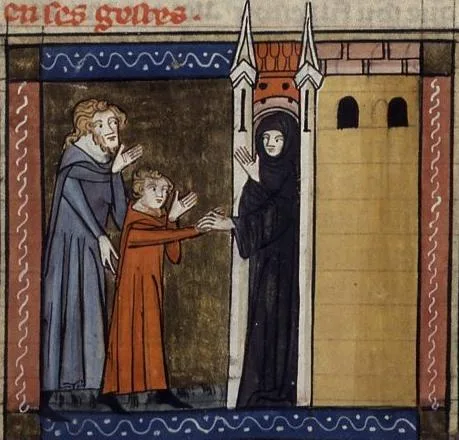
She entered the monastery disguised as a boy, was accused of a child she had not fathered, kept silence and raised it.
- Late Antiquity
- Türkiye
- Feast day June 18
- Nun
- Monk
- Virgin
Listen to the life 1:16
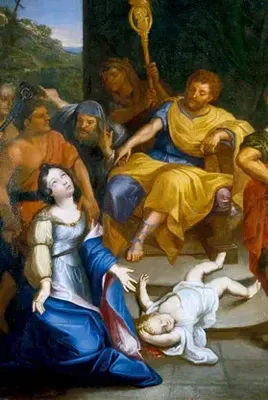
Left alone with her father, Marina followed him into the monastery under the name of Marinos, in a man's habit, and no one there saw a woman. An innkeeper's daughter, being pregnant, accused her of fathering her child. Marina did not defend herself: driven out, she lived at the monastery gate and raised the child there, then was taken back as a servant. Who she was came to light only when her body was washed for burial. The account is a hagiographic life, and not a testimony; the traditions do not agree on the places. The Byzantine synaxarion has her born in Bithynia and places her in a monastery near Alexandria, where it keeps her feast on 12 February; the Maronites call her of Qannoubin, in the holy valley of Lebanon. The Golden Legend, which made her known to the West, names no place at all. Even her century is uncertain: the Life appears to have been composed between 525 and 650, scholarship places her in the fifth century, and the received tradition in the eighth. Her feast falls on 18 June, among the Copts on 15 Mesra, and at Venice on 17 July, the day her relics were translated. She is not to be confused with Margaret of Antioch, whom the East also calls Marina and celebrates on that same 17 July.