Bénézet of Avignon
He began a bridge over the Rhône and died a year before it was finished.
- Middle Ages
- France
- Feast day April 14
- c. 1155 – 1184
- Confessor
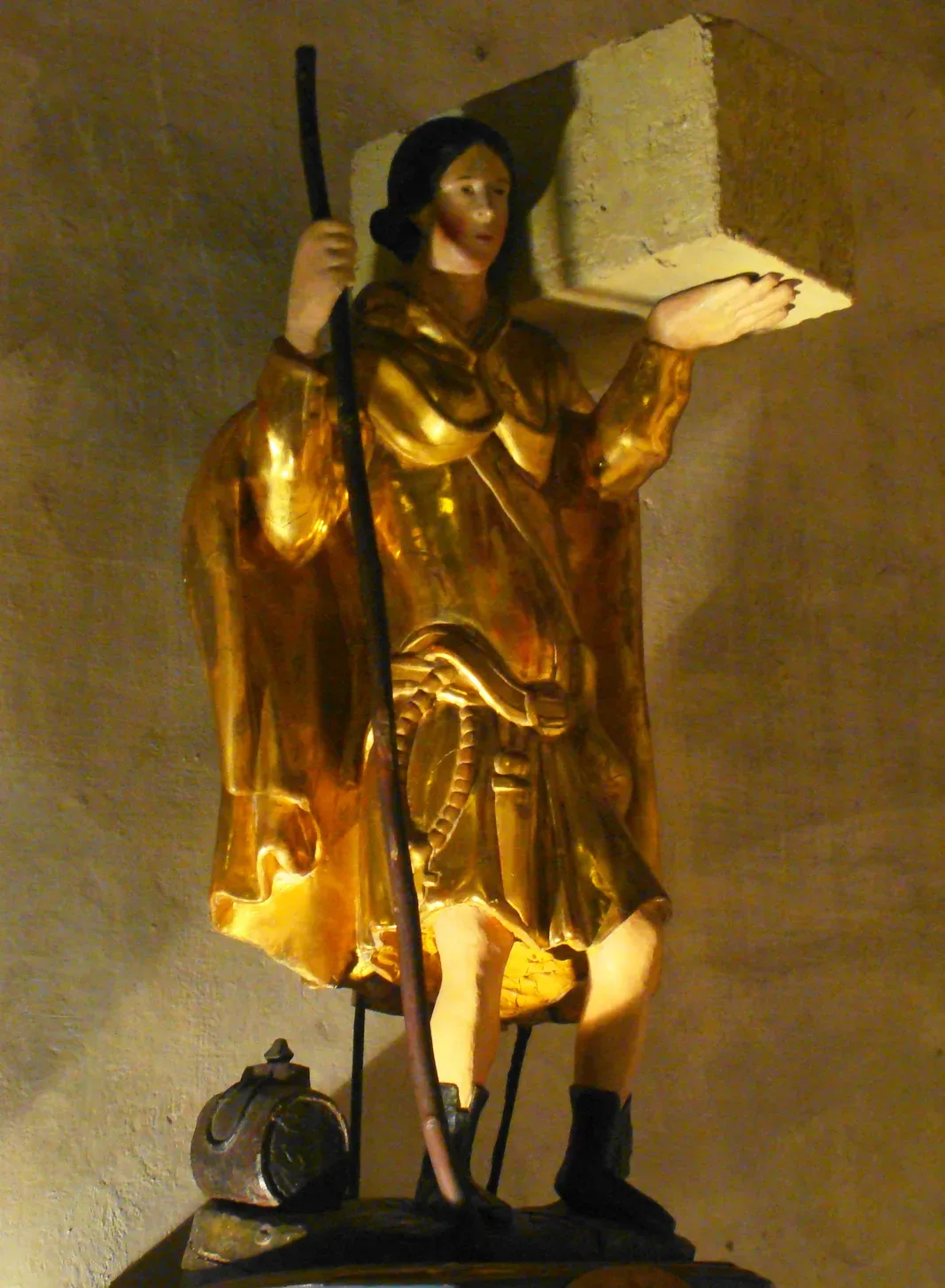
In 1177, writes the chronicler Robert of Auxerre, "a young man named Benedict came to Avignon, saying he was sent by God to build a bridge over the Rhône. He was laughed at… but he insisted with such conviction that the difficult work was undertaken with enthusiasm." He travelled the provinces collecting the funds. Two charters name him: in March 1180 a lord cedes to him his rights over the Rhône crossing, to him "procurator of the building of the bridge"; in April 1181 he is called inceptor et minister of the work. That same year a hospital of Saint Bénézet opened for poor travellers. The bridge had twenty-two arches over nearly nine hundred metres. He died in 1184, a year before it was finished, and asked to be buried not in the cathedral but in a chapel built on one of the piers, in the middle of his work. His tomb became a pilgrimage; he was called beatus by 1202 and sanctus by 1233, and John XXII approved his veneration in 1331. Legend has made of him a shepherd boy of twelve lifting a stone thirty men could not move — and that is how he is painted. The examination of his relics in 1980 gave back a man of one metre sixty-five, dead between twenty-five and thirty.
Patronage
Recognising
A young man carrying a heavy dressed stone on his back or in his arms, a shepherd’s crook, a bridge spanning the river behind.