Maria of Paris
Poet, mayor, twice married, a nun on condition of not being enclosed.
- Contemporary era
- France
- Feast day March 31
- 1891 – 1945
- Nun
- Martyr
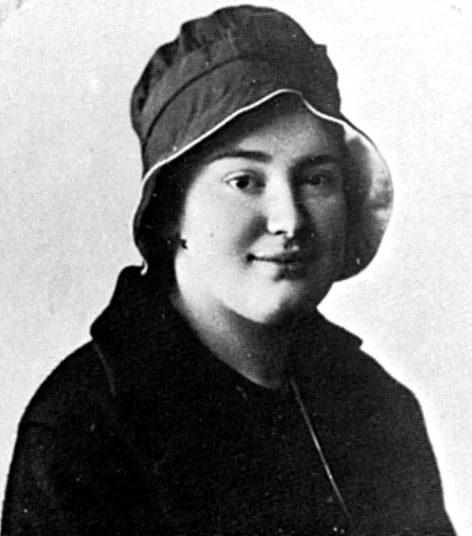
Elizaveta Pilenko, born at Riga in 1891, lost her father at fifteen and her faith with him. She was a poet of the Silver Age, the first woman admitted to the courses of the theological academy of St Petersburg, a Socialist Revolutionary, and mayor of Anapa in 1918 — tried for Bolshevism by the White Army, acquitted, she married her judge. Exile took her by way of Georgia and Constantinople to Paris in 1923. The death of her daughter Anastasia in 1926 brought her back to God. In 1932 Metropolitan Evlogy gave her the habit and the name of Maria, on a condition she had set herself: not to live enclosed. She opened a hostel, established from 1935 at 77 rue de Lourmel, where she took in women alone, the homeless, the sick. Under the Occupation the house became a refuge: Jews were hidden there, the chaplain issued false certificates of baptism, and she pulled three children out of the Vélodrome d'Hiver in July 1942. Arrested in February 1943 and deported to Ravensbrück, she died there in the gas chamber on 31 March 1945, on Holy Saturday of the Western calendar, a month to the day before the camp was liberated. Tradition holds that she took the place of another prisoner; her editors regard the fact as unestablished. Yad Vashem recognised her as Righteous Among the Nations in 1985, and the Ecumenical Patriarchate canonised her in 2004.
Recognising
An Orthodox nun in black habit, a cross in her hand; the iconography dates from her glorification in 2004 and is in no way ancient.