Ludolph of Ratzeburg
He refused to give up a castle and a set of dues, and died of his imprisonment.
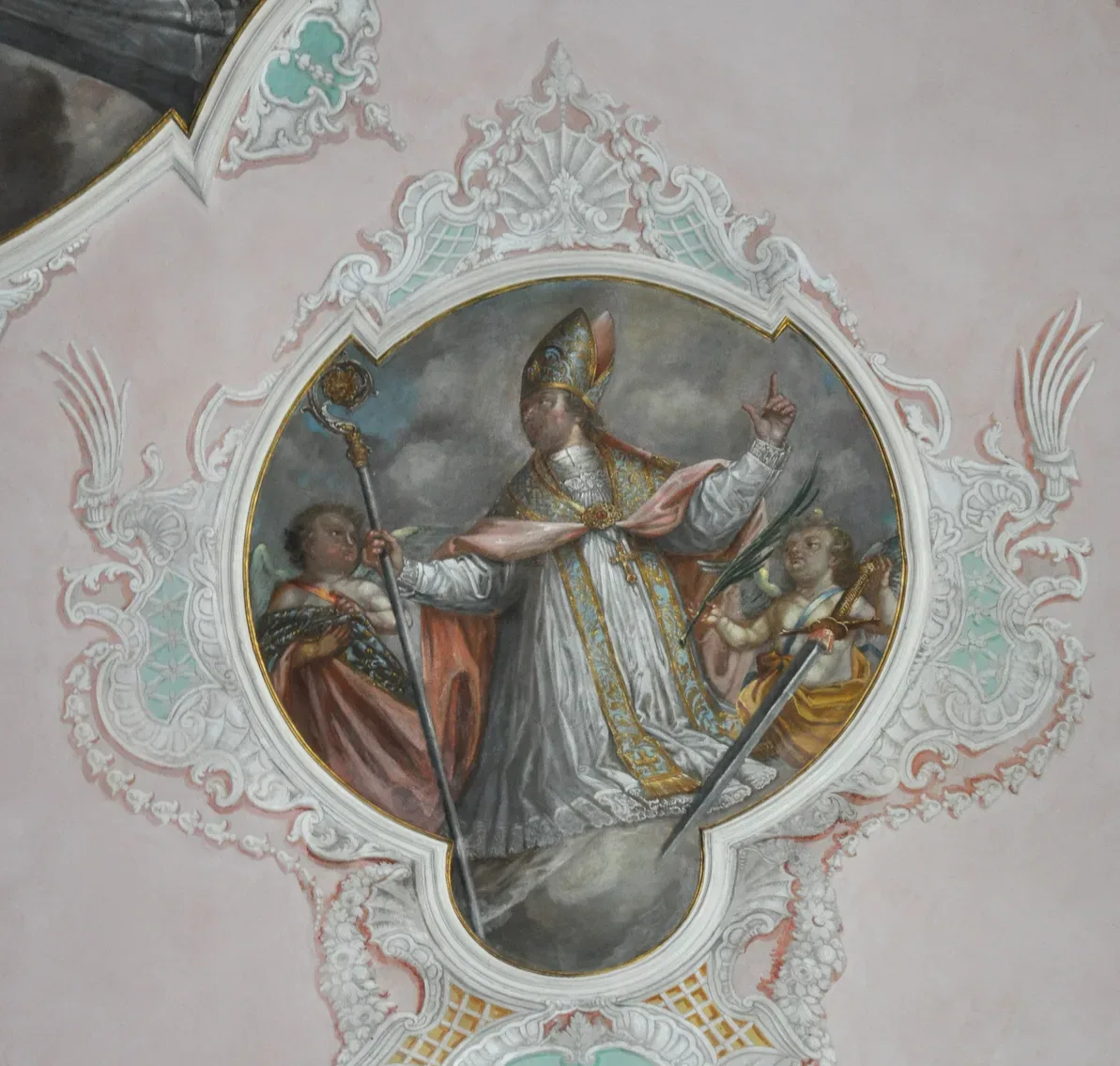
- Middle Ages
- Germany
- Feast day March 29
- † 1250
- Bishop
- Monk
- Martyr
A Premonstratensian canon, he was chamberlain of the chapter of Ratzeburg when he was elected bishop in 1236. He kept his rule under the mitre and imposed it on his canons, confirmed the women's monastery of Rehna the following year, and lived modestly. His see was held directly of the Empire, and Frederick II had just confirmed it in that immediacy; Duke Albert I of Saxony nonetheless claimed the advocacy of the land of Boitin, the castle of Farchau and the dues of the church's subjects. Ludolph refused. The conflict grew bitter from 1247: he was imprisoned and ill-treated — legend even names the Lübeck knight charged with the work, one Erikin de Nemore. Released and exhausted, he fled to John I of Mecklenburg, who lodged him in the Franciscan friary at Wismar. There he died on 29 March 1250 of the effects of his detention: it is on that ground, and not for an execution, that he is held a martyr for the liberty of the Church. His cause was opened in 1340 and he was canonised before 1384; Benedict XIII recognised his cult for the Premonstratensian order on 12 April 1728. In 2021 a metal detector brought to light, in the Klützer Winkel, the bronze matrix of his seal — the first episcopal seal recovered archaeologically in Germany.
Recognising
A bishop in the white Premonstratensian habit, with mitre and chains; sometimes healing a wounded man with an arrow in his head.