Emanuele Stablum
Asked to give up the priesthood for medicine, he turned his hospital into a refuge.
- Venerable
- Contemporary era
- Italy
- Feast day March 16
- 1895 – 1950
- Confessor
Son of a sawmill worker of the Val di Sole in Trentino, he entered the Sons of the Immaculate Conception at fifteen and made profession in 1913. Sent to Rome for the studies that led to the priesthood, he was in his first year of theology when his superior general asked him to leave it all for medicine. He obeyed, and was never ordained: he remained a brother all his life. A doctor of medicine at Naples in 1930, he joined the following year the Dermopathic Institute of the Immaculate in Rome — the first religious physician of his congregation. He reorganised its work, served there nineteen years, directed it after the war and formed there a school of dermatologists. Then came the German occupation of Rome. From 1943 to 1944 he opened the hospital doors to the hunted: some hundred people were hidden there, among them about fifty Jews, and opponents of the regime. He was also, alongside Luigi Gedda, one of the founders of the association of Italian Catholic physicians, born at Rome on 5 July 1944. He died on 16 March 1950, aged fifty-four. In 1992 the survivors themselves had a plaque set at the institute's entrance; Yad Vashem recognised him as Righteous Among the Nations in 2001, and Pope Francis declared him venerable in 2021.
Recognising
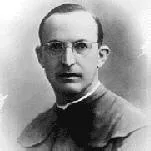
He is known from photographs, in religious habit or in a white coat; public cult being reserved to the beatified, he has no image of devotion.