Eulalia of Mérida
A girl of twelve who went alone to tell the judge what she thought of his gods.
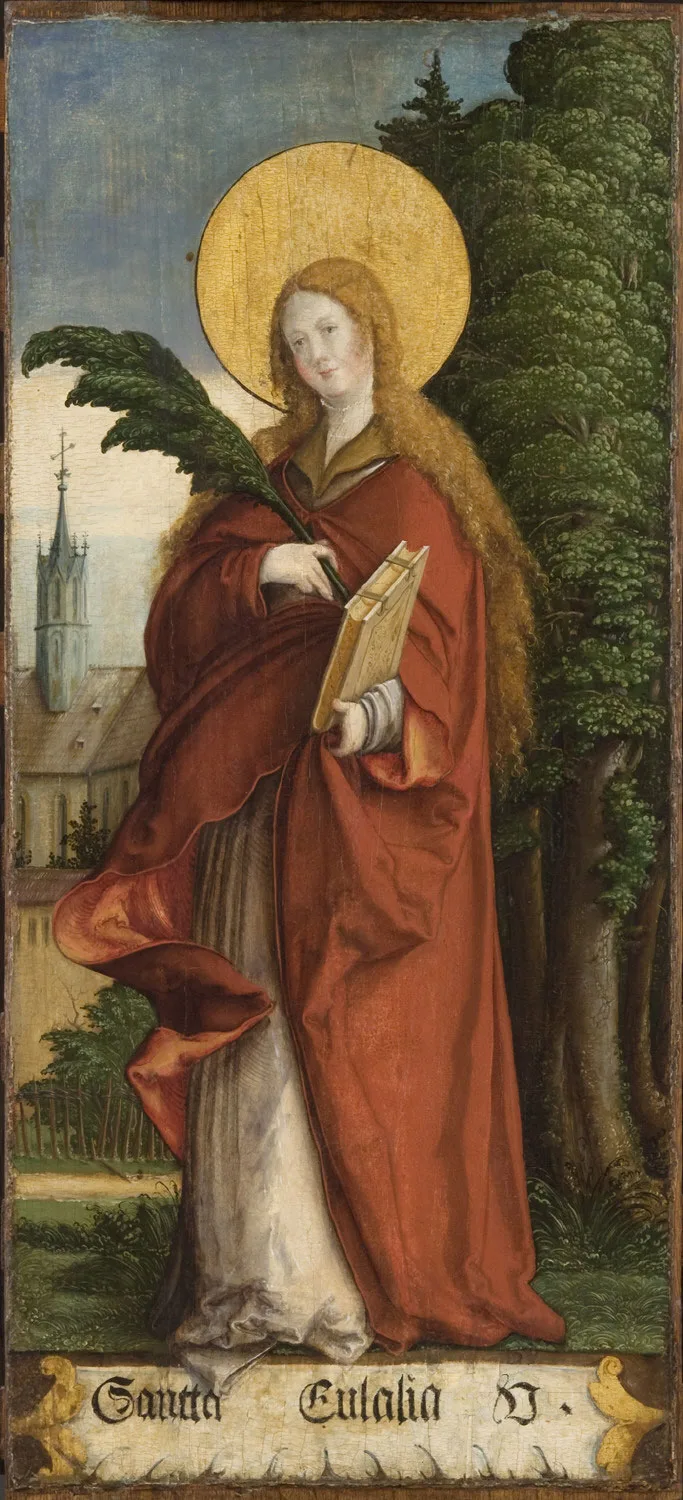
- Antiquity
- Spain
- Feast day December 10
- c. 290 – 304
- Martyr
- Virgin
In 304 Diocletian's edict reached Mérida, capital of Lusitania. Eulalia was twelve or thirteen; her Christian parents took her to the country to keep her safe. She slipped away by night, returned to the city and presented herself before the governor Dacian to reproach him for forcing consciences. She was flattered, shown the instruments, promised a good marriage; she overturned the idol and spat on the incense. She was burned alive. The poet Prudentius, a century later, devoted to her a hymn of the *Peristephanon* which fixed the story and carried her cult across Hispania. She is the patron of Mérida, and her name should not be confused with that of Eulalia of Barcelona, whose feast is 12 February.
Recognising
A very young girl in a tunic with palm and crown; a pyre or an X-shaped cross, and sometimes a dove escaping from her mouth.
Sayings for the day — December 10
- Si le soleil luit à la Sainte-Eulalie, pommes et poires à la folie.
Places
- Birth
- Mérida, Lusitanie
- Death
- Mérida, Lusitanie