Hilda of Whitby
An English abbess and a commanding presence in the Anglo-Saxon church. She established a prominent monastery on the Northumbrian coast, which flourished as a center of learning, and she hosted a synod that shaped the future of the English church.
- Early Middle Ages
- United Kingdom
- Feast day November 17
- c. 614 – 680
- Virgin
- Founder
Listen to the life 1:03
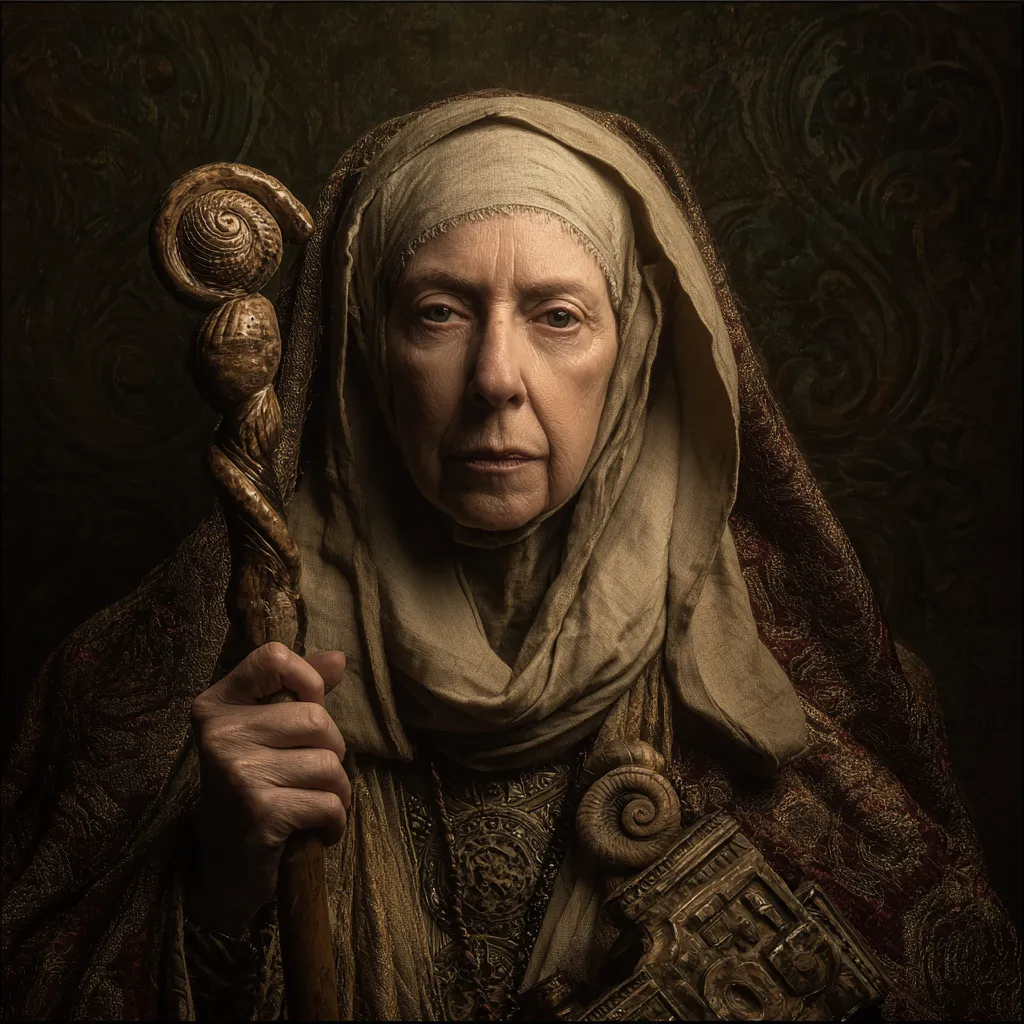
Saint Hilda of Whitby (c. 614 - 680) was a pivotal figure in the 7th-century Anglo-Saxon Church, a member of the Northumbrian nobility, daughter of Hereric and great-niece of King Edwin. Recalled by Saint Aidan just as she was preparing to join her sister at the monastery of Chelles, she embraced monastic life, becoming abbess of several monasteries, including Hartlepool. Her most renowned foundation was the double monastery of Whitby (Streoneshalh), established around 657. Whitby swiftly emerged as a major intellectual and spiritual hub, famed for its scholarship and for educating numerous bishops. It was also at Whitby that the celebrated Synod of Whitby took place in 664, addressing differences between Celtic and Roman ecclesiastical practices. Hilda is especially remembered for encouraging Cædmon, an illiterate cowherd of her monastery who became the first known poet in the English language and who composed his songs from memory. She was a wise and respected counselor, whose influence extended far beyond the walls of her monastery.
Patronage
Sharing the same feast day
Same era and same region
Places
- Birth
- Newark and Sherwood
- Death
- Whitby