Zita of Lucca
A servant in the same house for forty-eight years, and a saint by acclamation of the poor of Lucca.
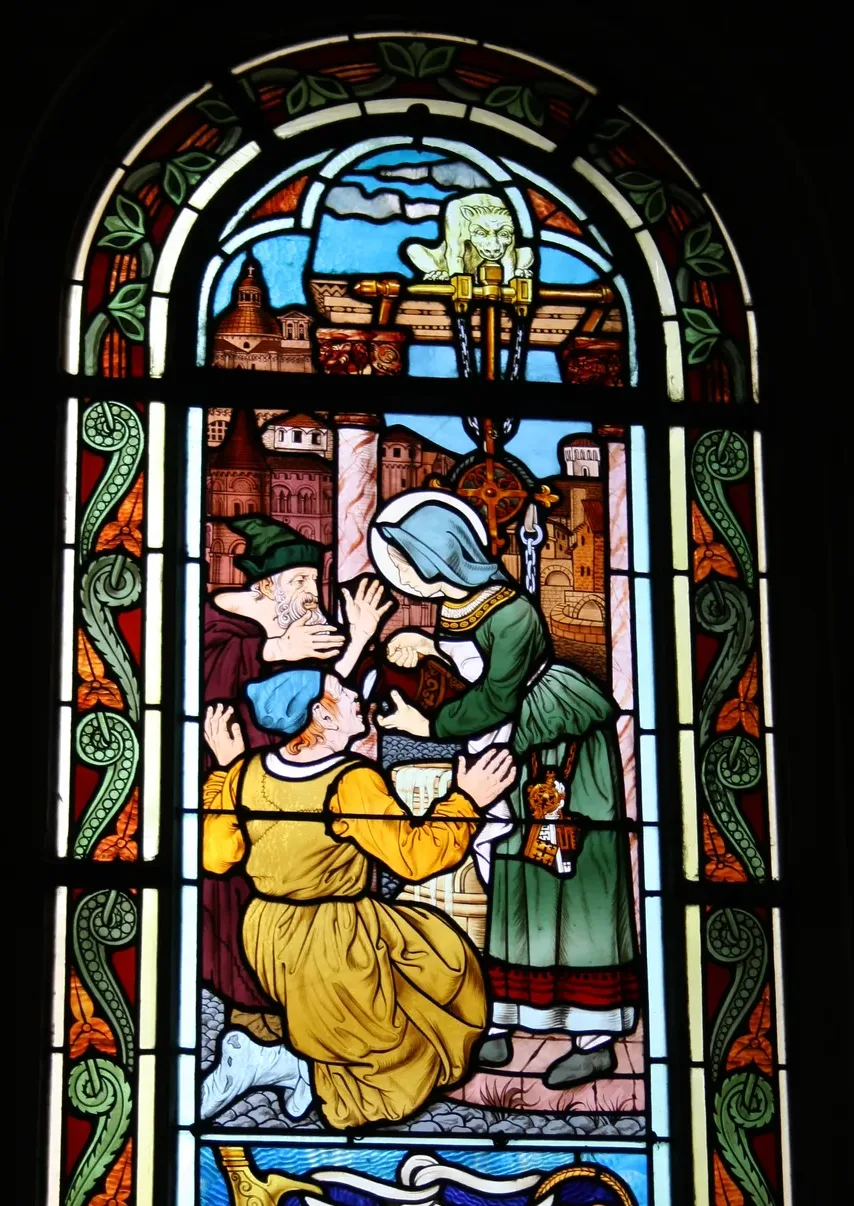
- Middle Ages
- Italy
- Feast day April 27
- c. 1218 – 1278
- Virgin
- Confessor
Daughter of poor peasants of Monsagrati, she was placed at twelve as a servant with the Fatinelli, silk merchants of Lucca, and never left: forty-eight years in the same house. The beginnings were hard — the masters ill-treated her, the other servants took her piety for affectation and made her pay for it. She answered nothing, and ended by governing the whole household. She rose before daylight for Mass before work, fasted to give her share to the poor, gave up her bed to the homeless; her mistress came to entrust her with the family's alms and the visiting of the sick. She died on 27 April, and her sanctity was decreed from below: it was the poor of Lucca who first invoked her. A generation later Dante was already calling the city's magistrates "the elders of Saint Zita". Her cult reached England, where she was called Sitha and invoked for finding lost keys. Leo X allowed a liturgical cult early in the sixteenth century, Innocent XII canonised her in 1696, Benedict XIV added her name to the Roman Martyrology in 1748, and Pius XII gave her in 1955 as patron to domestic workers. Her body is displayed in the basilica of San Frediano at Lucca.
Patronage
Recognising
A servant in plain dress, a bunch of keys at her belt, a water jug and loaves; sometimes flowers in her apron, a late tradition.