Celestine I
He governed the East by letters and legates, and never once set foot there.
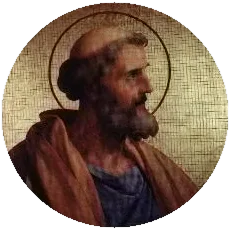
- Late Antiquity
- Italy
- Feast day April 6
- c. 359 – 432
- Pope
- Confessor
A Campanian, deacon of the Roman church where he is mentioned as early as 416, he was elected pope in 422 and reigned ten years without opposition. We owe him a letter to the bishops of Gaul, in 428, worth quoting: they had adopted a distinctive clerical dress, and he wrote that we must be marked off from the people "by our learning, not our clothes; by our conduct, not our attire". He supported the mission of Germanus of Auxerre to Britain against Pelagianism, and above all, in 431, he ordained a certain Palladius bishop and sent him "to the Scots believing in Christ" — the first bishop of Ireland, whom later tradition confused with Patrick. The year before, in 430, he had had Nestorius condemned by a Roman synod and charged Cyril of Alexandria with serving the sentence on him, Nestorius having ten days to retract in writing, and dispatched three legates to the council of Ephesus with a clear instruction: not to debate, but to judge. Against the Novatians of Rome, who refused penance to the baptised who had fallen back into sin, he took away their churches; and to the bishops of the provinces of Vienne and Narbonne he wrote that it can never be refused to a dying man who sincerely asks for it. He died on 27 July 432 and was buried in the cemetery of Priscilla.
Recognising
A pope in tiara with the papal cross; sometimes a dove, a dragon overcome, and a flame.