Benjamin of Persia
He was given his freedom on condition that he keep silent; he refused the condition.
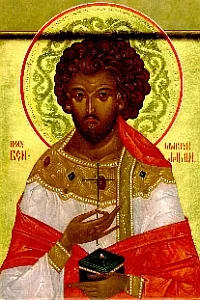
- Late Antiquity
- Persia
- Feast day March 31
- † c. 424
- Deacon
- Martyr
A deacon of the Church of Persia, in a place the sources call Argol, he preached among the Zoroastrian magi and won conversions there. The general persecution, set off under Yazdegerd I after a bishop had destroyed a fire temple and refused to rebuild it, had him thrown into prison. He stayed there a year or two. An ambassador of the emperor Theodosius II obtained his release, but with a clause attached: that he should stop preaching. Benjamin refused to bind himself to it — it was impossible, he said, not to pass on the light he had received — and took up his preaching again the same day. Under Bahram V, successor of Yazdegerd who died in 420, he was arrested once more and ordered to deny the one he worshipped. Sharpened reeds were driven between the nails and the flesh of his hands and feet, several times over, and then he was impaled on a knotted stake. The Greek synaxarion sums him up in a couplet, playing on the blessing of Jacob that made Benjamin a ravening wolf: Benjamin is a sheep and not a wolf; seized by wolves, he is offered but does not offer.
Recognising
A deacon in dalmatic with the palm of martyrdom; sometimes the reeds of his torture.