Symeon the New Theologian
A Byzantine monk exiled for saying that God could be seen — and for telling it.
- Middle Ages
- Türkiye
- Feast day March 12
- 949 – 1022
- Monk
- Priest
- Mystic
- Theologian
Born in 949 in Asia Minor — in Galatia according to some, in Paphlagonia according to others — and sent to study at Constantinople with an uncle in the imperial service, at fourteen he met the monk Symeon the Studite, who became his spiritual father and made him wait: too young for the cloister, he stayed thirteen years in the world, an official by day and keeping vigil by night. Admitted at last to the Stoudion in 977, his exclusive attachment to his master gave offence and he was dismissed within months. He moved to the dilapidated monastery of St Mamas and became its abbot in 980: he restored its walls and its rule, and preached to his monks each morning those Catecheses in which he does a thing then without precedent in the East — recounting his own experiences of God, known as light. That is what cost him his office. Stephen, metropolitan of Nicomedia, brought a six-year suit against him, whose pretext was the cult he paid to his dead spiritual father, and whose real stake was who has the right to speak of God. Symeon held that an unordained monk may, if he has the experience of grace. He resigned in 1005, was exiled in 1009, refused the archbishopric offered in exchange for his silence, and spent thirteen years on the far shore of the Bosphorus writing his Hymns. With John the Apostle and Gregory of Nazianzus he is one of only three whom the East calls Theologian — not for his learning, but because he spoke of what he had seen.
Recognising
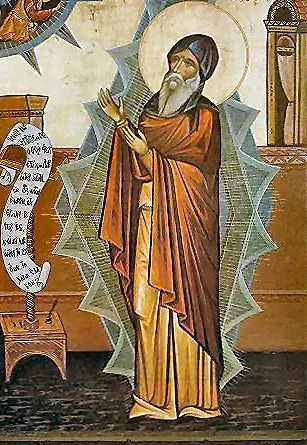
A bearded Byzantine monk in dark habit, holding an open scroll bearing a text from his Hymns.