Crispin and Crispinian of Soissons
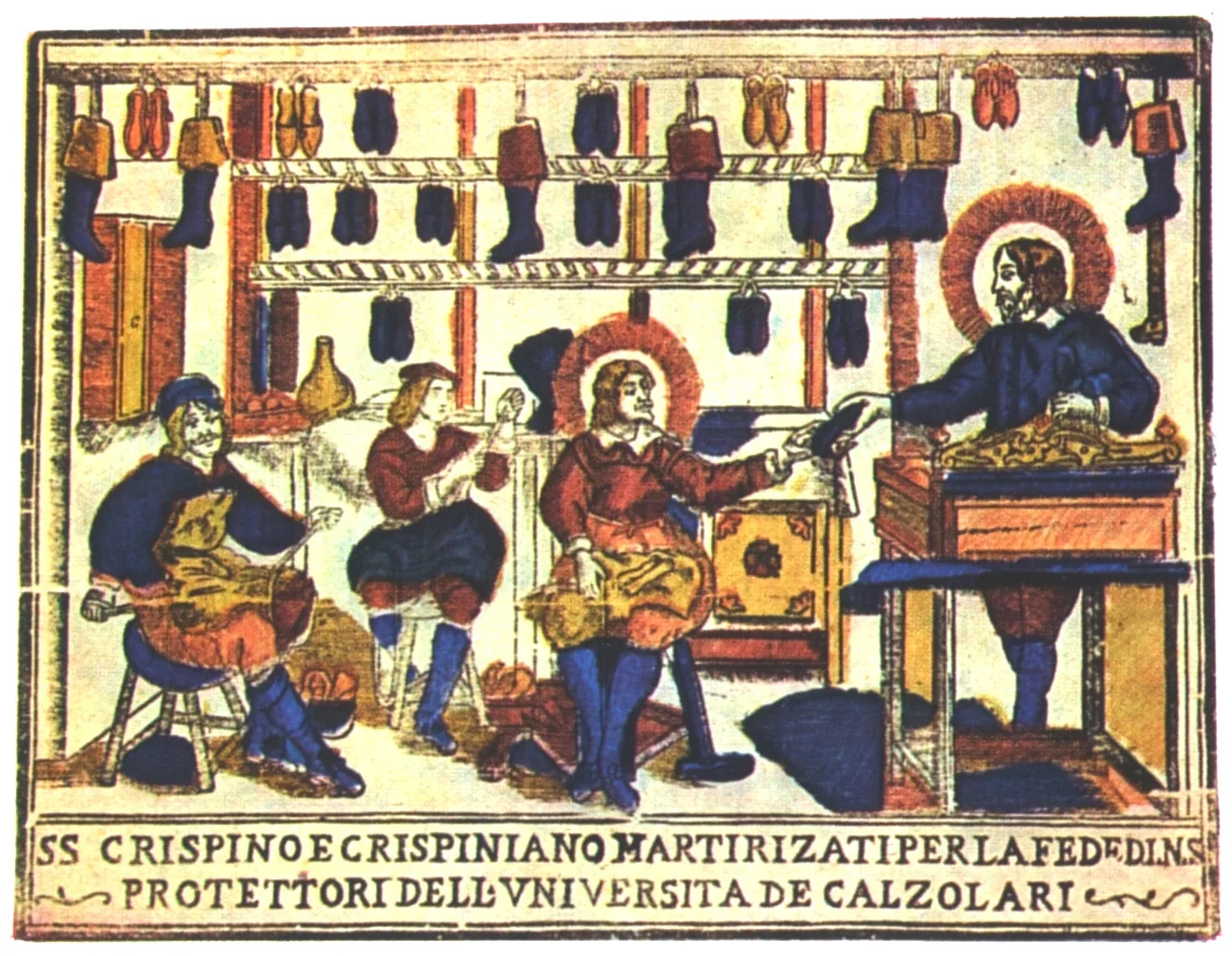
Two shoemakers martyred at Soissons, whose trade kept their feast for fifteen centuries.
- Antiquity
- France
- Feast day October 25
- Martyr
Tradition makes them brothers, come from Rome to evangelise Gaul around 285 and settled at Soissons, where they made shoes by day and preached in the evening, asking nothing of anyone. Denounced under Maximian, they were tortured and beheaded. None of this is attested before the sixth century, and historians hold their passion to be late; what is certain is the reach of their cult. Guilds of shoemakers and tanners took them as patrons across Europe, carried their banner and kept 25 October as a holiday — "Saint Crispin" meant both the feast day and the cobbler's kit of tools. Shakespeare makes that day the day of Agincourt, in Henry V's speech.
Patronage
Recognising
Two young men side by side, awl and shoemaker’s last in hand, sometimes a shoe; martyrs’ palms.
Sayings for the day — October 25
- À la Saint-Crépin, les mouches voient leur fin.