Pachomius the Great
He invented the monastery: before him one withdrew to the desert alone; after him, together.
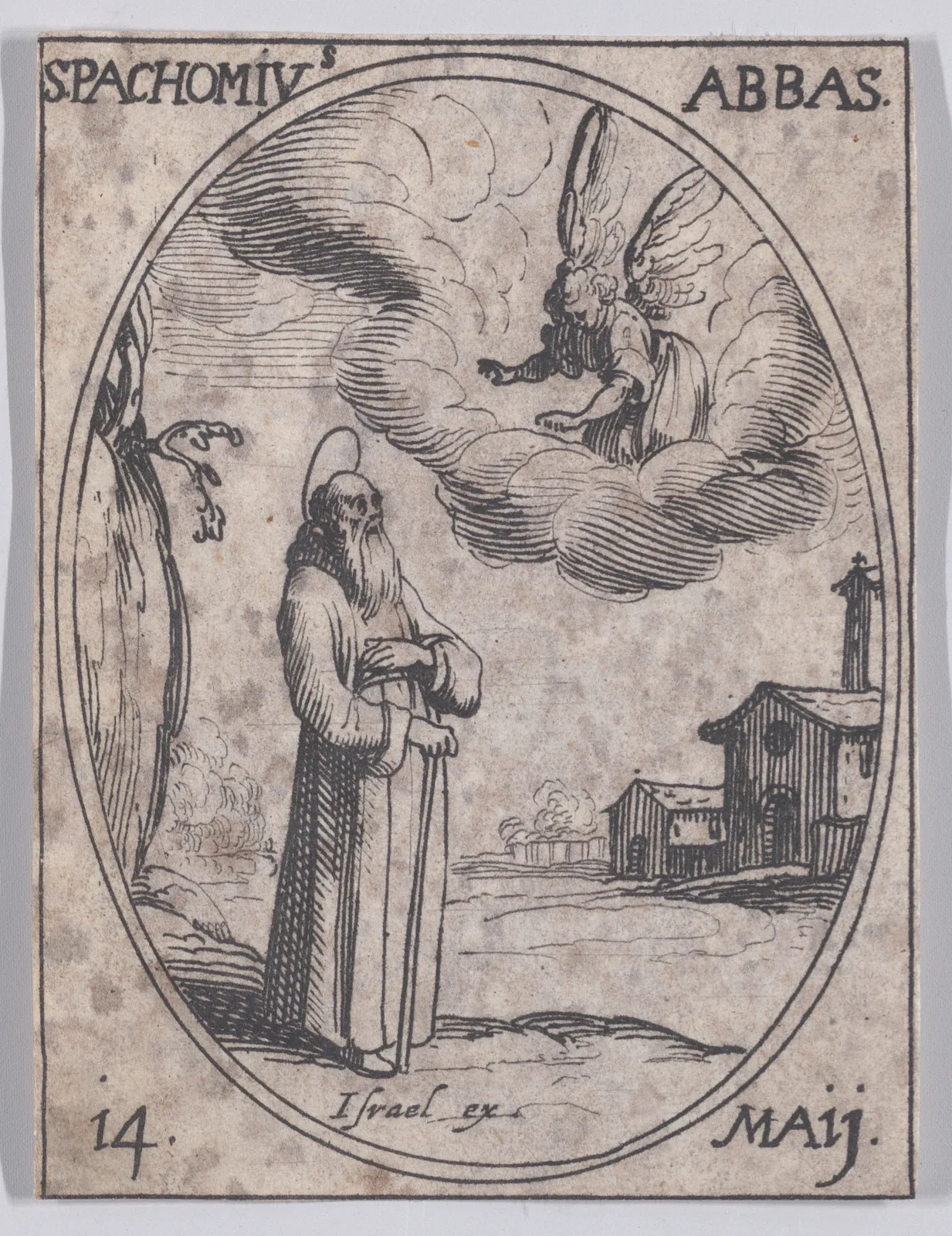
- Late Antiquity
- Egypt
- Feast day May 9
- c. 292 – 348
- Monk
- Founder
- Hermit
- Confessor
Born around 292 in Upper Egypt to pagan parents, he was conscripted into the Roman army at about twenty. Held at Thebes with his fellow recruits, he saw Christians from the town come and feed the prisoners expecting nothing in return: it was that act, not any preaching, that settled his life. Freed, he was baptised and put himself under the hermit Palamon. Around 320, at Tabennisi, he gathered disciples under one roof, one rule and one shared work — the first monastery in the sense the word has had ever since. His rule would feed those of Basil and Benedict; Jerome would translate it into Latin, and it is through him that the West came to know it. At his death in 348, carried off by an epidemic he refused to flee, nine monasteries of men and two of women followed his rule.
Patronage
Recognising
A Coptic monk in cowl with a staff; sometimes an angel handing him a tablet on which the rule is written.
Places
- Death
- Pbow, Haute-Égypte