Peter Canisius
A Dutch Jesuit whose catechisms held Catholic Germany together for two centuries.
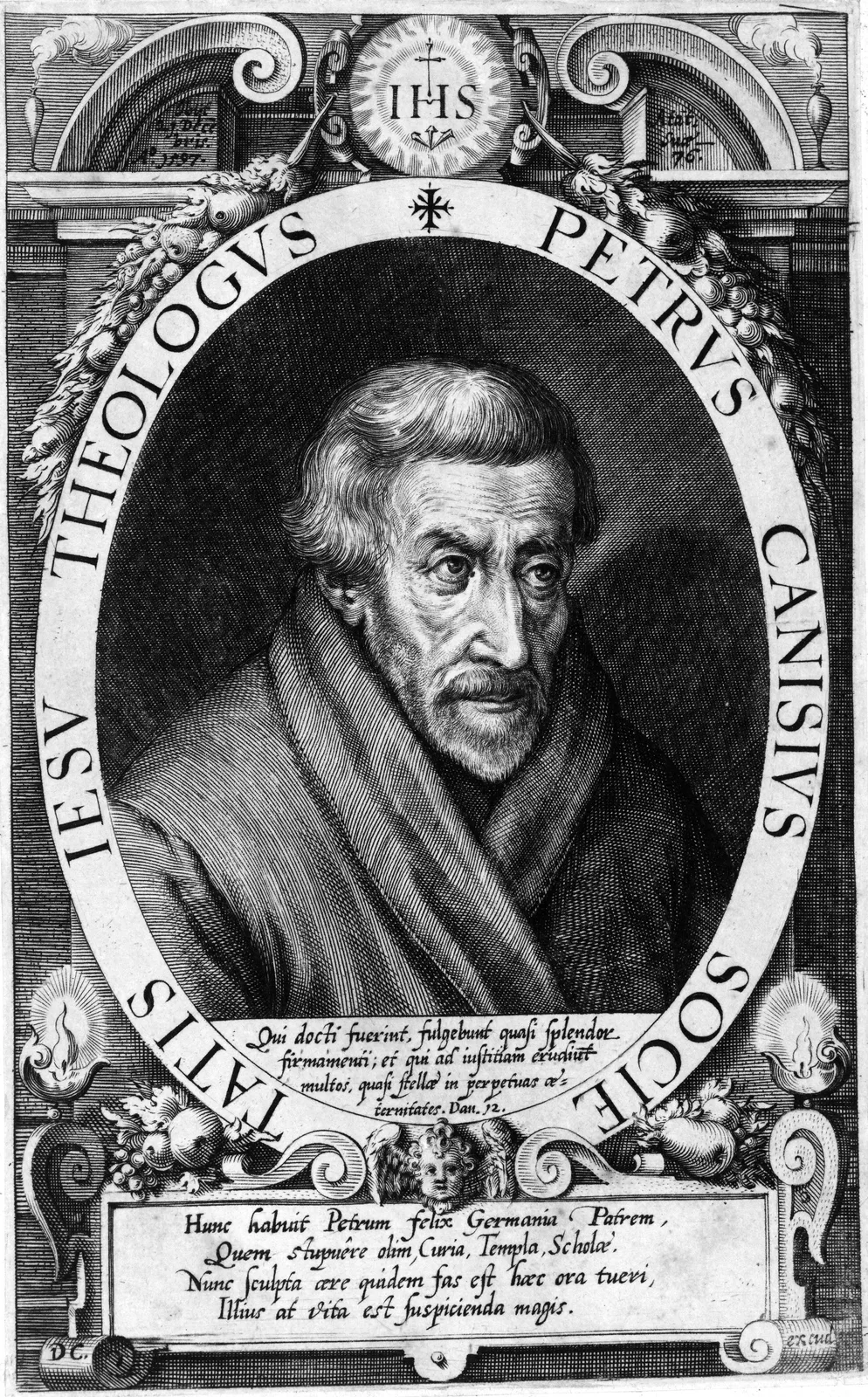
- Early modern era
- Germany
- Feast day December 21
- 1521 – 1597
- Priest
- Doctor of the Church
- Theologian
- Missionary
- Confessor
Born at Nijmegen in 1521, the son of the burgomaster, he studied at Cologne and in 1543 entered the Jesuits, of whom he was the first Dutch member. Sent to Germany, he spent almost his whole life there at a time when the Reformation had carried off entire regions: he taught at Ingolstadt and Vienna, founded colleges at Prague, Munich, Innsbruck and Fribourg, and travelled the Empire so constantly that his journeys have been reckoned in tens of thousands of kilometres, on foot or on horseback. His most lasting work rests in three books: a large catechism for teachers, a middle one for colleges, a small one for children, published between 1555 and 1558. Plain, unpolemical and translated everywhere, they ran to more than two hundred editions in his lifetime, and "the Canisius" would mean the catechism itself in German-speaking lands into the twentieth century. He refused the see of Vienna, withdrew to Fribourg in 1580 and died there in 1597. Pius XI canonised him and proclaimed him a Doctor of the Church on the same day, 21 May 1925.
Recognising
A Jesuit in black cassock and cloak, an open book in hand — the catechism; sometimes a pen, or a child to whom he shows the text.