Catherine of Genoa
Married at sixteen to a spendthrift husband, she ran her city’s great hospital and wrote of purgatory as a fire that heals.
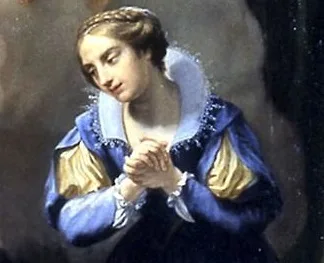
- Early modern era
- Italy
- Feast day September 15
- 1447 – 1510
- Mystic
- Widow
Born in 1447 into the Fieschi family, which had given two popes, she was married at sixteen to Giuliano Adorno to seal an alliance between rival clans. Ten years of loneliness and depression followed, her husband squandering his fortune elsewhere. In 1473 a confession she never finished turned her round at a stroke; she dated from that day a conversion that never left her. Ruined, Giuliano drew close to her again, and the two settled at the hospital for incurables in Genoa, where she nursed the sick and in 1490 became director of the establishment, administering it through the plague of 1493 — which carried off four fifths of those who had stayed in the city. A circle of laypeople and priests formed around her. Her conversations, gathered after her death, make up the Treatise on Purgatory and the Spiritual Dialogue: she describes purgatory not as punishment but as a burning of love that purifies, a reading that marked European spirituality as far as Fénelon and Newman. She died in 1510. Canonised in 1737, she is commemorated on 15 September.
Patronage
Recognising
Shown in dark dress beside a sickbed, or in ecstasy with a flame cupped in her hands.