Martin I
Seized in Rome by an emperor, tried for treason and deported to Crimea, he is the last pope to die a martyr.
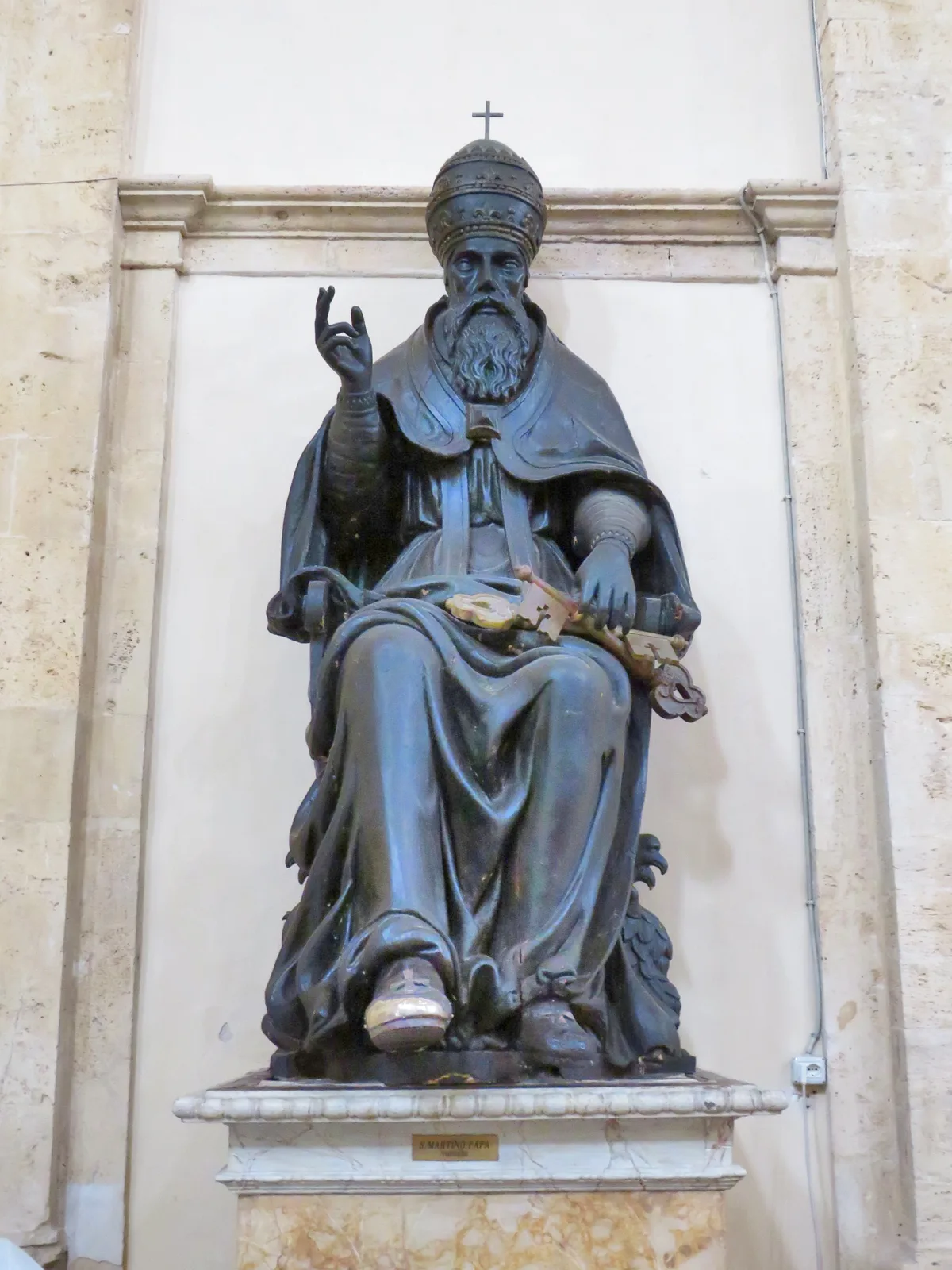
- Early Middle Ages
- Italy
- Feast day April 13
- † 656
- Pope
- Martyr
Elected in 649 without waiting for Constantinople's assent, he at once convened a council at the Lateran that condemned monothelitism — the doctrine upheld by the emperor Constans II, that Christ had but one will — and rejected the imperial decree forbidding debate on it. The answer was slow but not wanting: in 653 the exarch of Ravenna had the sick pope seized from the Lateran basilica and taken to Constantinople. Tried for treason rather than heresy, stripped of his vestments and exposed to the public, he was condemned to death and then reprieved at the intercession of the dying patriarch. Deported to Cherson in Crimea, he died there in 656 of hunger and ill treatment, complaining in his letters of being forgotten by the Roman Church, which had already given him a successor. He is the last bishop of Rome venerated as a martyr. He is commemorated on 13 April.
Recognising
Shown as a pope, sometimes in chains or holding the martyr's palm, the only attribute that sets him apart from his predecessors.
Places
- Birth
- Todi
- Death
- Sébastopol