Gregory VII
He kept an emperor waiting three days barefoot in the snow, and died in exile for wanting a Church free of princes.
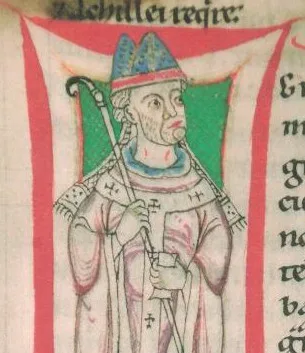
- Middle Ages
- Italy
- Feast day May 25
- c. 1015 – 1085
- Pope
- Monk
Hildebrand of Sovana, a monk formed in Rome, served several popes before being elected himself in 1073 by acclamation of clergy and people. His pontificate carried a programme: to wrest the Church from lay control. He forbade simony, imposed celibacy on the clergy, and above all disputed with rulers the right to invest bishops — the Investiture Contest. The emperor Henry IV had him deposed by an assembly of bishops; he excommunicated Henry and released his subjects from their oath. In January 1077 the emperor came to Canossa and waited three days before the castle before obtaining pardon: the scene became the symbol of a spiritual power above the temporal. What followed favoured him less. Henry returned in force, took Rome in 1084 and installed an antipope; freed by the Normans, whose sack of the city turned the Romans against him, Gregory died in exile at Salerno in 1085. Canonised in 1606, he is commemorated on 25 May.
Recognising
Shown as a pope holding tiara and crozier, sometimes with the emperor Henry IV kneeling at his feet in the snow of Canossa.