John XXIII
Elected at seventy-seven to be a stopgap pope, he summoned a council that changed the face of his Church.
- Contemporary era
- Italy
- Feast day October 11
- 1881 – 1963
- Pope
Angelo Roncalli was born in 1881 to a family of sharecroppers near Bergamo, fourth of thirteen children. An army chaplain in the First World War, then a Holy See diplomat in Bulgaria, Turkey and Greece, he used his position in Istanbul to have papers issued to Jews fleeing persecution. Nuncio in Paris after the Liberation, he defused the crisis over bishops accused of collaboration. Patriarch of Venice, he was elected pope in 1958 at seventy-seven: an interim was expected of him. Three months later he announced an ecumenical council, the first since 1870. Vatican II opened in 1962 and reopened very nearly every question the Church had considered closed. His encyclical Pacem in terris, written during the missile crisis, addressed itself for the first time to “all men of good will” rather than to Catholics alone. He died in June 1963, between two sessions of the council. Canonised in 2014, he is commemorated on 11 October, the day Vatican II opened.
Recognising
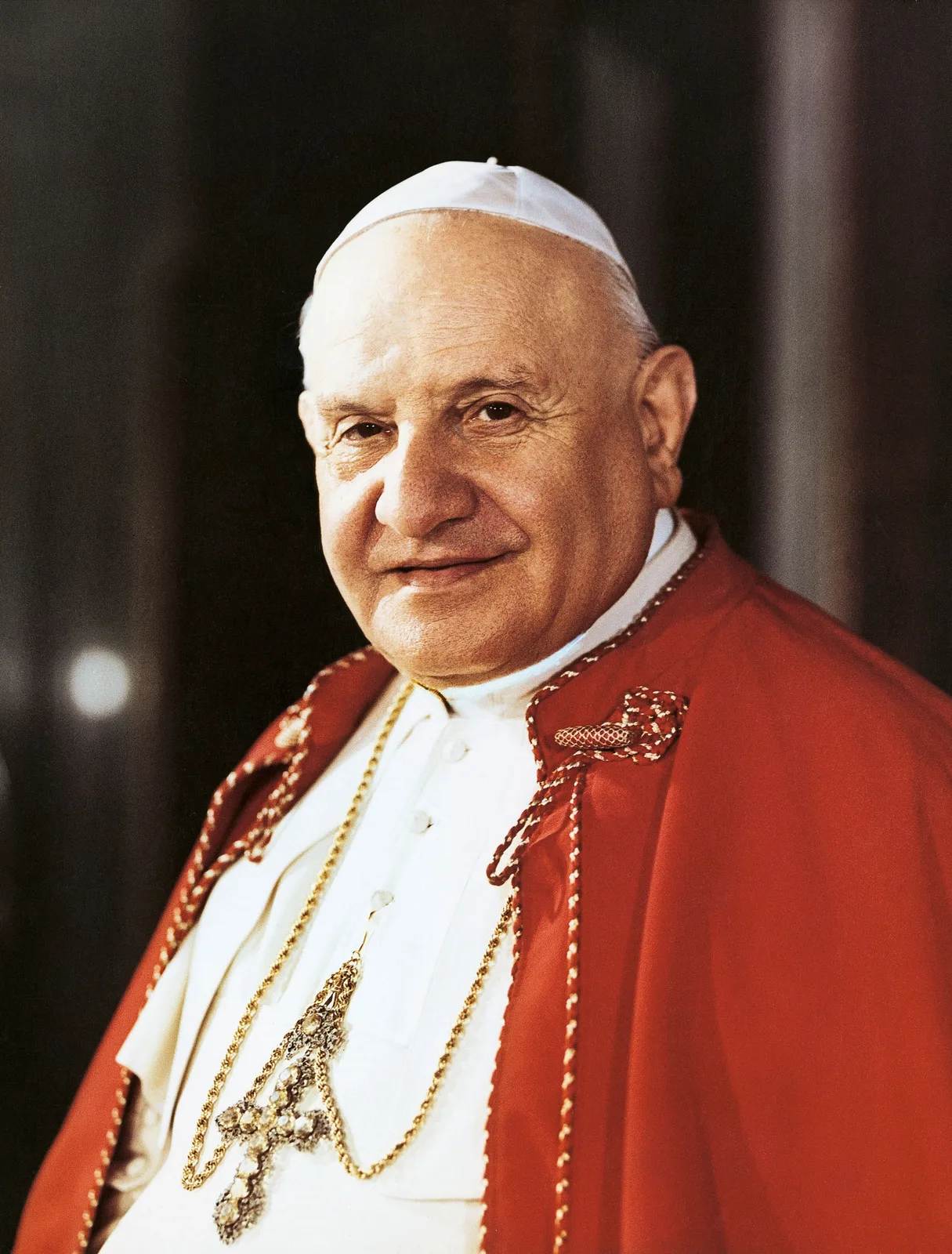
Shown in white cassock, stout and smiling, sometimes wearing the red camauro whose use he had revived.