Paul Miki and companions
A Japanese Jesuit crucified with twenty-five others on a hill above Nagasaki, he preached from his cross.
- Early modern era
- Japan
- Feast day February 6
- c. 1564 – 1597
- Martyr
- Missionary
Born around 1564 into a well-off Japanese family, son of a converted military commander, he entered the Jesuits and became a preacher, noted for his command of the language and his knowledge of Buddhism, which he turned against his opponents. In 1597 the regent Toyotomi Hideyoshi, alarmed at foreign influence, had twenty-six Christians arrested — six Franciscans from Europe and the Philippines, three Japanese Jesuits including Paul Miki, and seventeen laypeople, among them three children. Each had an ear cut off, and they were marched from Kyoto to Nagasaki, some eight hundred kilometres in midwinter, so that the journey itself would serve as warning. On 5 February 1597 they were bound to crosses on the hill of Nishizaka and pierced with lances. Witnesses report that Paul Miki preached from his cross and forgave his executioners. Canonised in 1862, they are commemorated on 6 February.
Patronage
Recognising
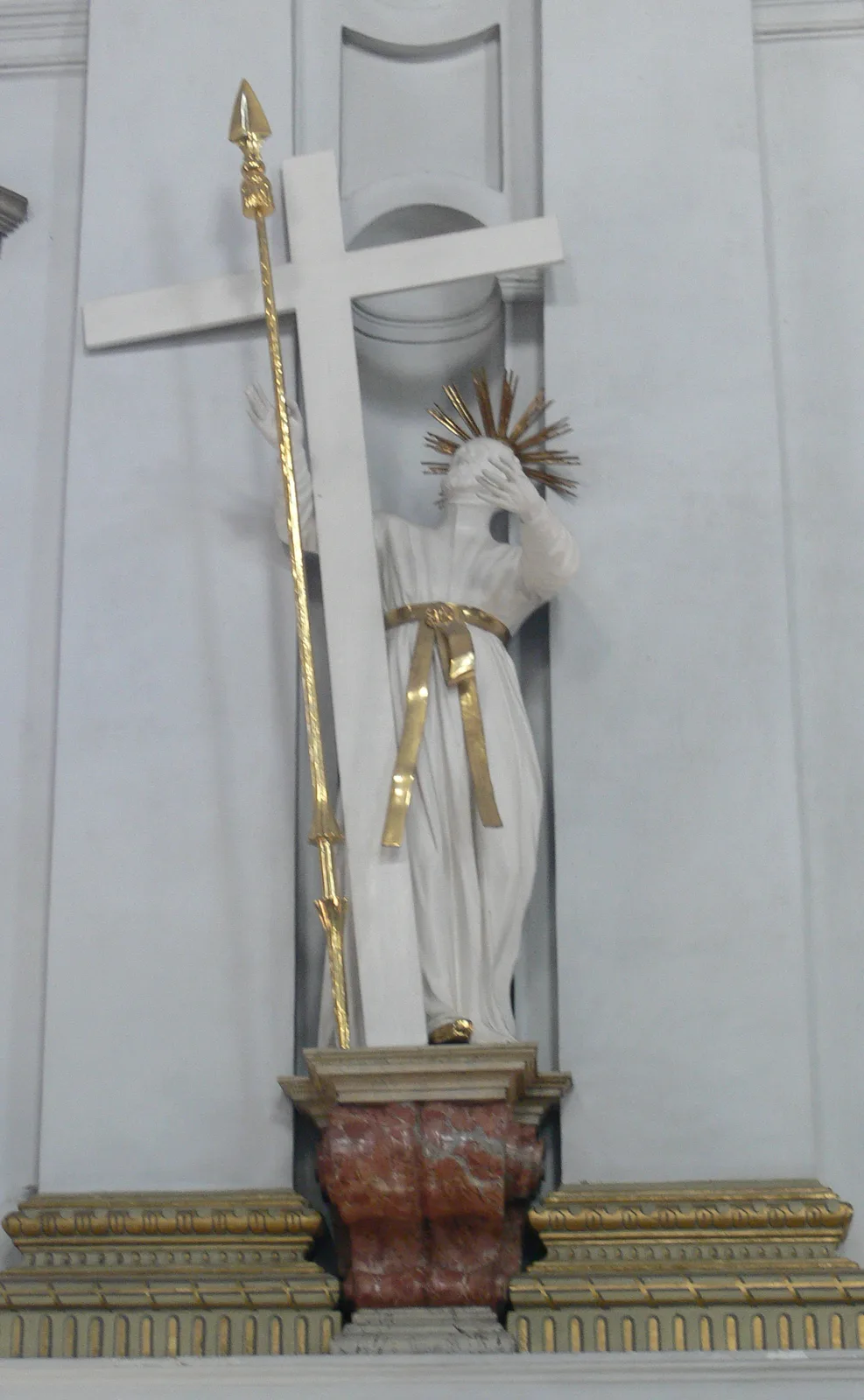
Shown bound to a cross among twenty-five others, in the black habit of a Jesuit, on the hill of Nagasaki.