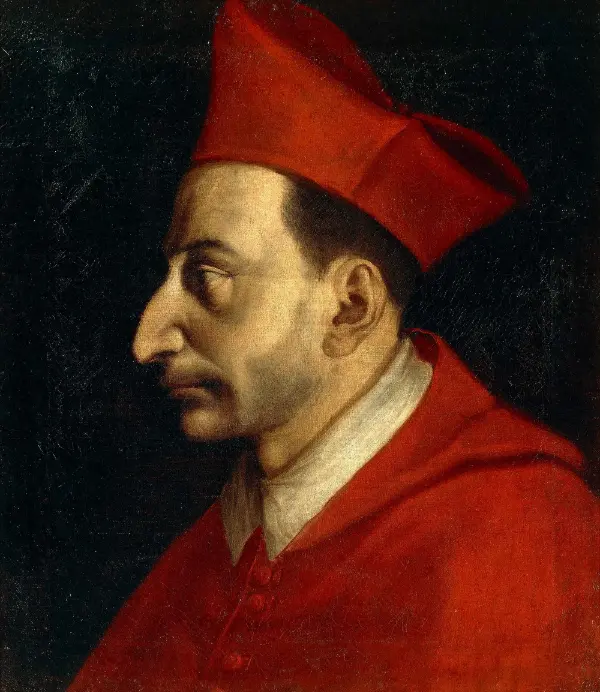
Charles Borromeo
Archbishop of Milan from 1564 to 1584 and a cardinal. A leading figure during the Counter-Reformation, he was responsible for significant reforms in the Catholic Church.
- Early modern era
- Italy
- Feast day November 4
- 1538 – 1584
- Bishop
- Priest
- Confessor
- Nun
Saint Charles Borromeo was a central figure of the Catholic Counter-Reformation in the 16th century. Born into a noble Italian family, he was the nephew of Pope Pius IV. After studying law, he was made a cardinal at the age of 22 and became a major participant in the Council of Trent, overseeing the implementation of its decrees. Appointed Archbishop of Milan in 1564, he undertook extensive reforms to restore ecclesiastical discipline and religious fervor, tackling corruption, improving clerical formation (by founding seminaries), and promoting rigorous catechesis. He lived a life of great austerity and was tirelessly devoted, particularly during the great plague of 1576-1577 in Milan, where he remained with his people, distributing aid and organizing relief. His profound piety, pastoral zeal, and reformative action made him a model for post-Tridentine bishops. He was canonized in 1610.
Patronage
Sayings for the day — November 4
- A la Saint Charles la gelée parle.