Bonaventure of Bagnoregio
A Franciscan friar, Doctor of the Church, and philosopher known as the 'Seraphic Doctor,' he was a leading figure in scholastic theology.
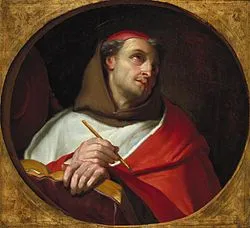
- Middle Ages
- Italy
- Feast day July 15
- 1221 – 1274
- Doctor of the Church
- Bishop
- Priest
- Mystic
Saint Bonaventure of Bagnoregio, born Giovanni di Fidanza around 1221 in Bagnoregio, Italy, was one of the most significant figures in 13th-century scholastic theology and philosophy. He joined the Franciscan Order in 1243 and studied at the University of Paris under Alexander of Hales, earning his doctorate in theology in 1257, the same year he was elected Minister General of the Friars Minor. Under his leadership, the order experienced a period of consolidation and growth, with Bonaventure striving to balance the original ideal of Saint Francis with the necessities of a growing institution.
Known as the 'Seraphic Doctor' due to the depth of his mystical thought and his fervent love for God, Bonaventure sought to reconcile faith and reason, Aristotelian philosophy and Augustinian tradition. His major works include the 'Itinerarium Mentis in Deum' (The Mind's Journey into God), a mystical treatise describing the soul's ascent to God, the 'Breviloquium,' and 'Commentaries on the Sentences' of Peter Lombard.
In 1273, he was appointed Cardinal-Bishop of Albano by Pope Gregory X and played a crucial role in the preparation and proceedings of the Second Council of Lyon in 1274, which aimed at the union of the Latin and Greek Churches. He died during the council on July 15, 1274. He was canonized by Pope Sixtus IV in 1482 and proclaimed a Doctor of the Church by Sixtus V in 1588. His thought, marked by wisdom and piety, profoundly influenced Franciscan theology and Christian spirituality.
Patronage
Places
- Birth
- Bagnoregio
- Death
- Lyon