William of Bourges
A Cistercian pulled from his cloister for an archbishopric, canonised nine years after his death.
- Middle Ages
- France
- Feast day January 10
- c. 1140 – 1209
- Bishop
- Monk
- Confessor
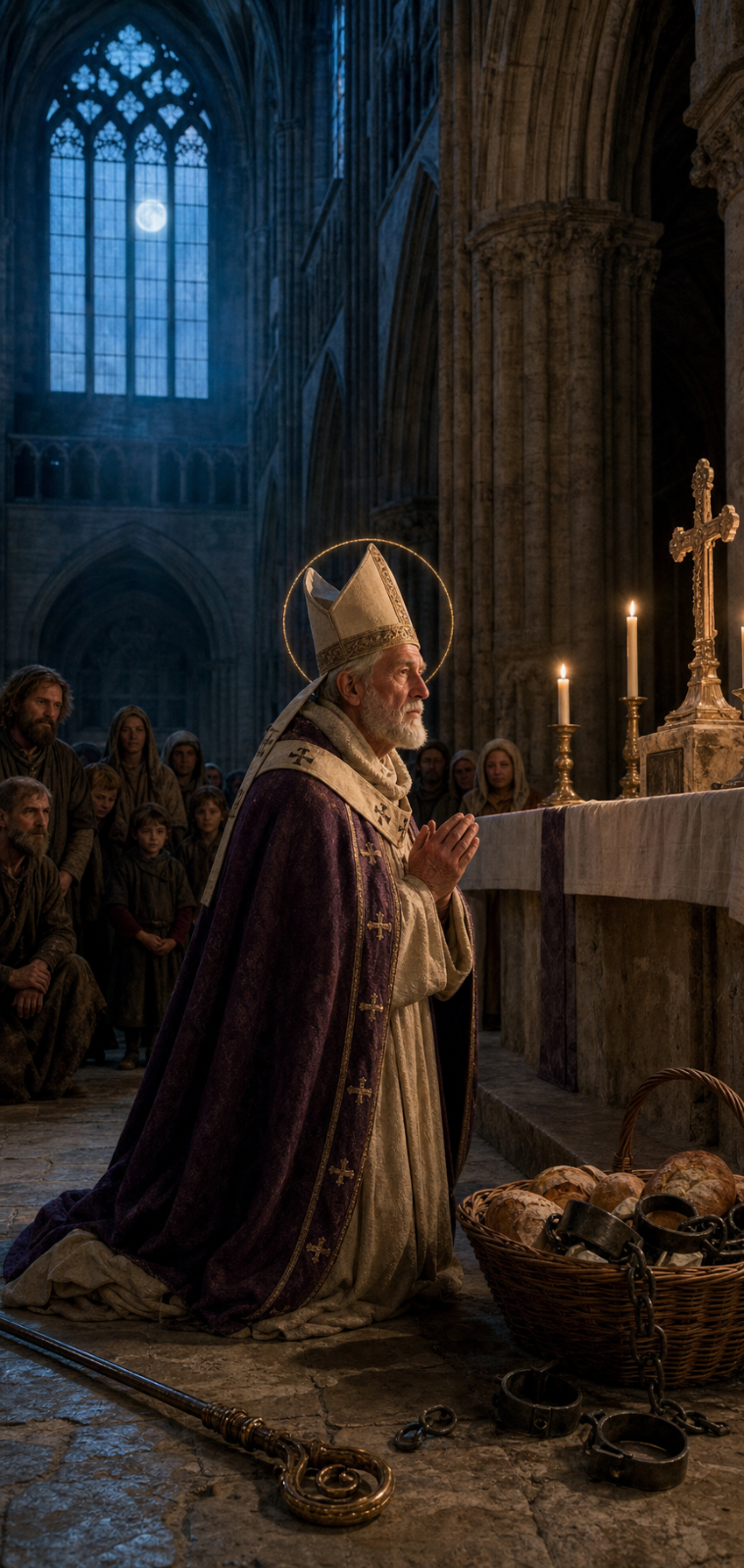
William of Donjon, born around 1140 at the castle of Arthel near Nevers, was brought up by his maternal uncle Peter, archdeacon of Soissons. A canon at Soissons and then at Paris, he left everything for Grandmont, then passed to Cîteaux in 1167. Abbot of Chaalis, he was elected archbishop of Bourges in 1200 and refused until his order’s general commanded him and Innocent III pressed him to accept. Under the purple he kept the rough habit and the monks' regime, spent the revenues of his see ransoming captives and feeding the poor, and stood up to royal power, going so far as to publish against Philip Augustus the interdict of Innocent III after he repudiated his wife. He was preparing a preaching mission among the Albigensians when he died, in the night of 10 January 1209, kneeling before the altar. Honorius III canonised him in 1218, nine years later — a speed that says how unanimous he left them behind him.
Recognising
An archbishop in mitre, the white habit of Cîteaux beneath the vestments; sometimes a ciborium or a poor man at his feet.
Sayings for the day — January 10
- S’il fait beau à la Saint-Guillaume, il y aura beaucoup de blés aux champs.
Places
- Death
- Bourges, Berry