Matilda of Ringelheim
Queen of Germany, mother of an emperor and an archbishop, stripped of her goods by her own sons.
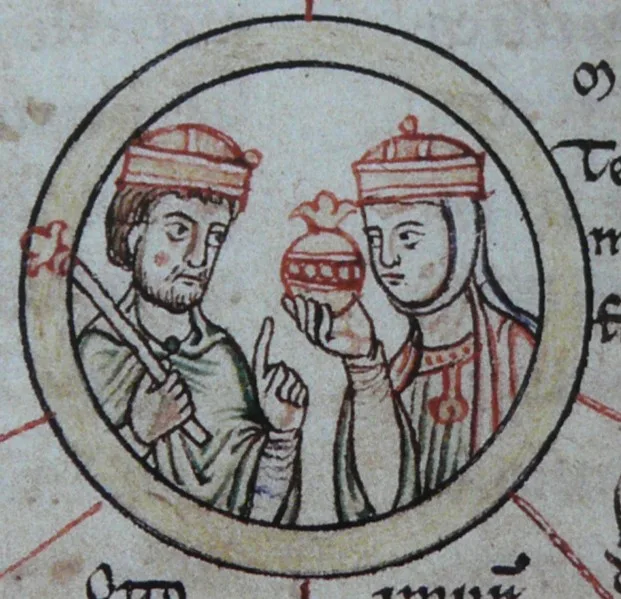
- Early Middle Ages
- Germany
- Feast day March 14
- c. 895 – 968
- Queen
- Widow
- Founder
Born around 895 into the Saxon nobility and raised at the convent of Herford, in 909 she married Henry the Fowler, the future king of Germany. Widowed in 936, she saw her two eldest sons contend for the crown: Otto won and would become emperor, Henry rebelled three times. The two agreed, however, in reproaching her for the sums she gave to the poor and to monasteries, and made her hand her property back. She withdrew; she was recalled and asked forgiveness — the chronicle of her life, written shortly after her death, hides nothing of the episode. She founded or endowed the abbeys of Quedlinburg, Nordhausen, Enger and Pöhlde, and died at Quedlinburg in 968, having outlived her husband by thirty-two years. Her third son, Bruno, was archbishop of Cologne.
Patronage
Recognising
A crowned queen in an ermine mantle, handing coins to beggars; sometimes a church held in her hands.
Sayings for the day — March 14
- Pluie de Sainte-Mahaud n’est jamais trop.
Places
- Birth
- Enger, Westphalie
- Death
- Quedlinbourg, Saxe