Henry II emperor
The only canonised German emperor, he founded a bishopric on his own lands and governed by leaning on the Church.
- Middle Ages
- Germany
- Feast day July 13
- 973 – 1024
- King
- Founder
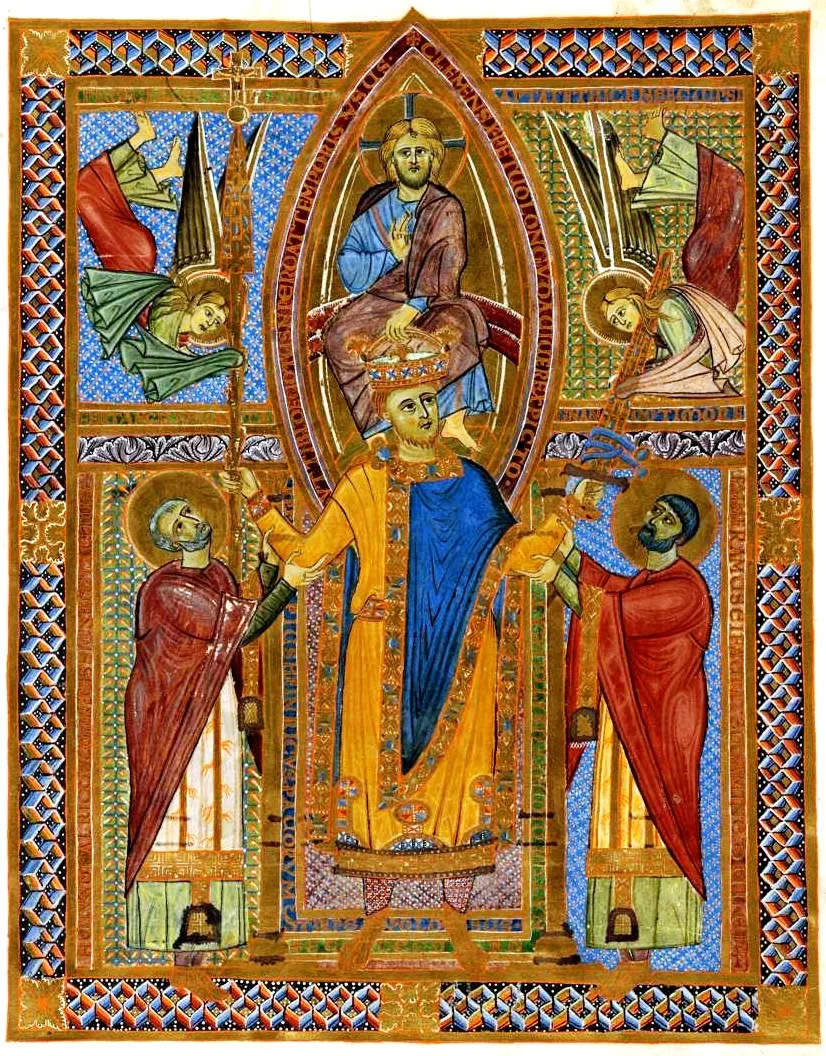
Born in 973, duke of Bavaria, he was elected king of Germany in 1002 and crowned emperor at Rome in 1014. His reign rested on a simple and effective idea: to make the Church an instrument of government. He appointed bishops, endowed them with lands and regalian rights, and expected them to administer the empire — a system his successors would push to the crisis of the Investiture Contest. In 1007 he founded the bishopric of Bamberg on his own domain and heaped gifts upon it; its cathedral holds his tomb and that of his wife Cunigunde. He supported the monastic reform of Cluny and Gorze while keeping a firm hand on the abbeys. His campaigns in Italy and against Poland occupied most of his reign. Dying childless in 1024, he was canonised in 1146 — the only Holy Roman Emperor to be so. He is commemorated on 13 July.
Recognising
Shown crowned, holding the imperial orb and a model of Bamberg cathedral, often beside Saint Cunigunde.
Sayings for the day — July 13
- A Saint-Henri suée, Mauvaise moissonnée.
Places
- Birth
- Bad Abbach
- Death
- Gœttingue