Paul VI
He inherited a council begun by another, brought it to its close and bore its consequences alone.
- Contemporary era
- Italy
- Feast day May 29
- 1897 – 1978
- Pope
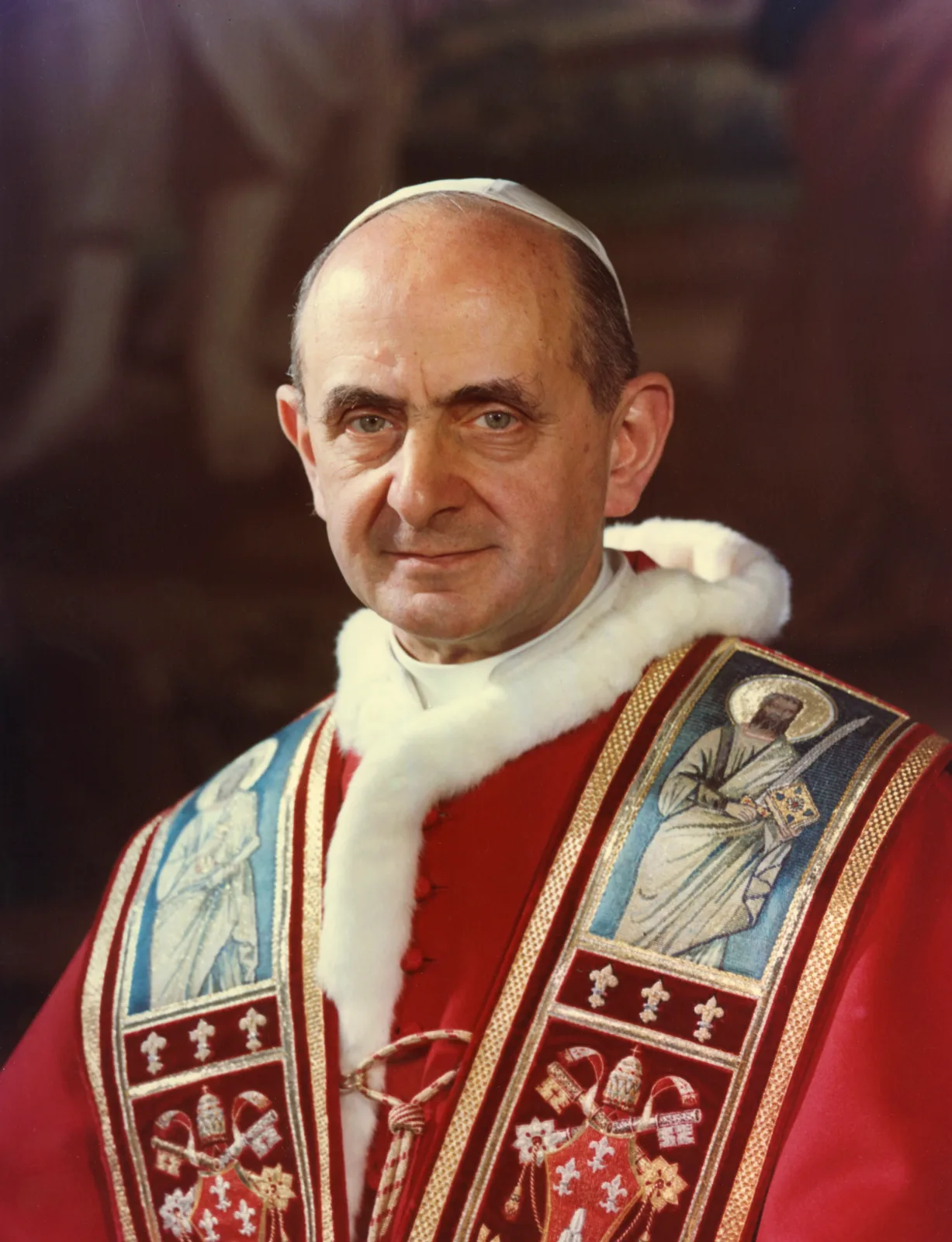
Giovanni Battista Montini was born in 1897 near Brescia, son of a lawyer and Catholic member of parliament. Thirty years in the Roman Secretariat of State made him a man of the curia; as archbishop of Milan from 1954 he became known in the working-class districts. Elected pope in 1963, he chose to continue the council opened by John XXIII and brought it to its close in 1965. The implementation fell to him: reform of the liturgy, creation of the synod of bishops, opening towards other confessions, and the first journeys by a pope outside Italy in centuries — to the Holy Land, India, the United Nations, Uganda. His encyclical Populorum progressio made the development of peoples a question of justice. Humanae vitae, in 1968, maintained the ban on contraception and provoked a dissent that has never subsided; he wrote no further encyclical in his last ten years. He died in August 1978. Canonised in 2018, he is commemorated on 29 May.
Recognising
Shown lean and grave, in white cassock, sometimes wearing the tiara he was the last pope to receive and which he sold for the poor.
Places
- Birth
- Concesio
- Death
- Castel Gandolfo