Cornelius pope
Elected during a persecution, he held that a Christian who had faltered could be readmitted, against those who wanted a Church without fault.
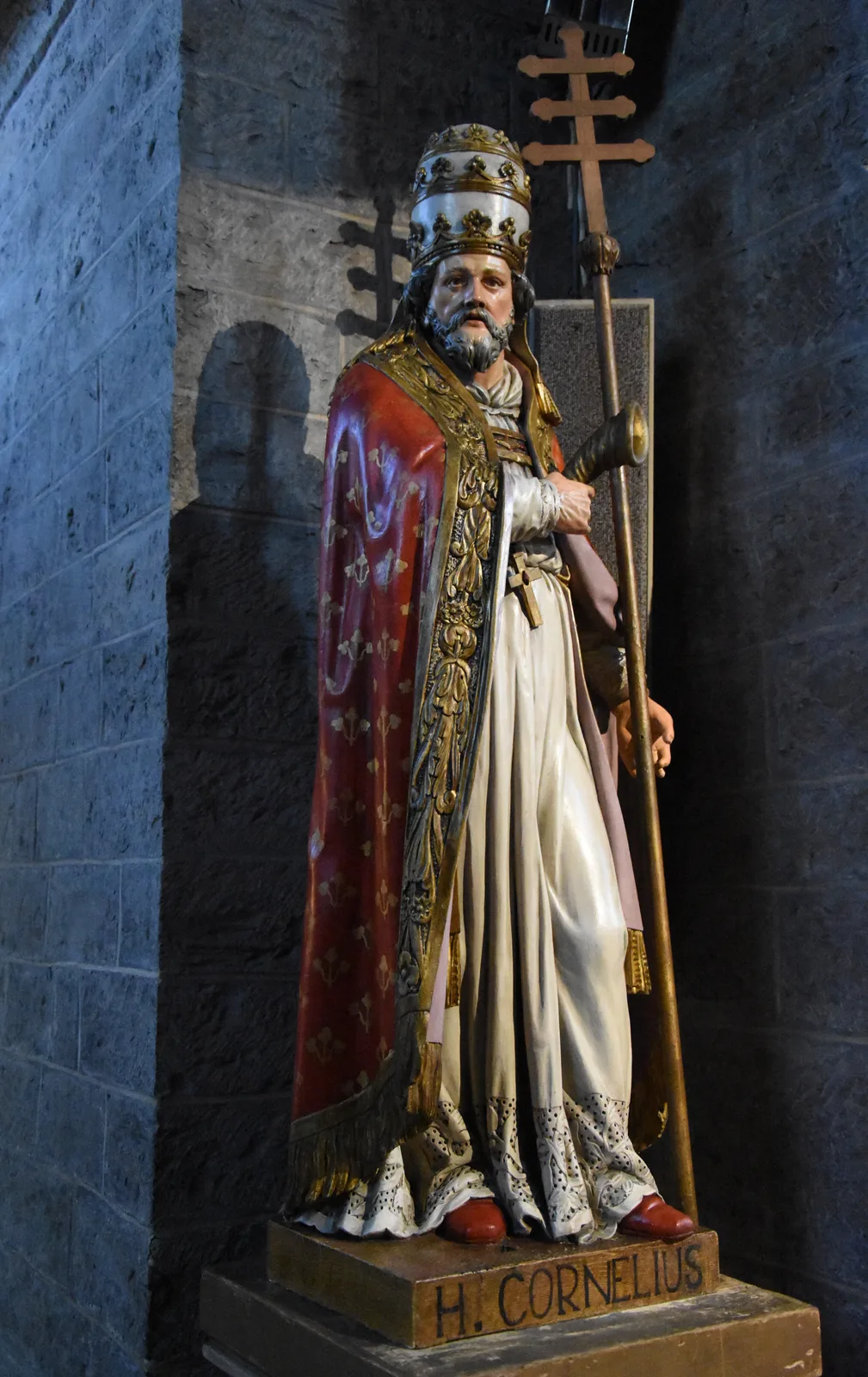
- Antiquity
- Italy
- Feast day September 14
- † 253
- Pope
- Martyr
Elected bishop of Rome in 251, after a vacancy of more than a year caused by the persecution of Decius, he immediately faced the question dividing the Church: what to do with the lapsi, those Christians who had sacrificed to idols to save their lives? The priest Novatian, holding for a Church of the pure, refused all reconciliation and had himself elected against him, opening Rome's first lasting schism. Cornelius maintained instead that penance could reopen communion, a position defended alongside him by Cyprian of Carthage, whose correspondence with him is among the major sources on the third-century Church. A Roman council of sixty bishops upheld him. Exiled to Centumcellae, present-day Civitavecchia, under the persecution of Gallus, he died there in 253 and the Church honours him as a martyr. He is commemorated on 14 September with Cyprian.
Recognising
Shown as a pope holding a horn — a play on his name — or accompanied by a bull, sometimes with Cyprian of Carthage.