Pius X
A rural postman’s son who became pope, he lowered the age of first communion to seven and sought to “restore all things in Christ”.
- Contemporary era
- Italy
- Feast day August 21
- 1835 – 1914
- Pope
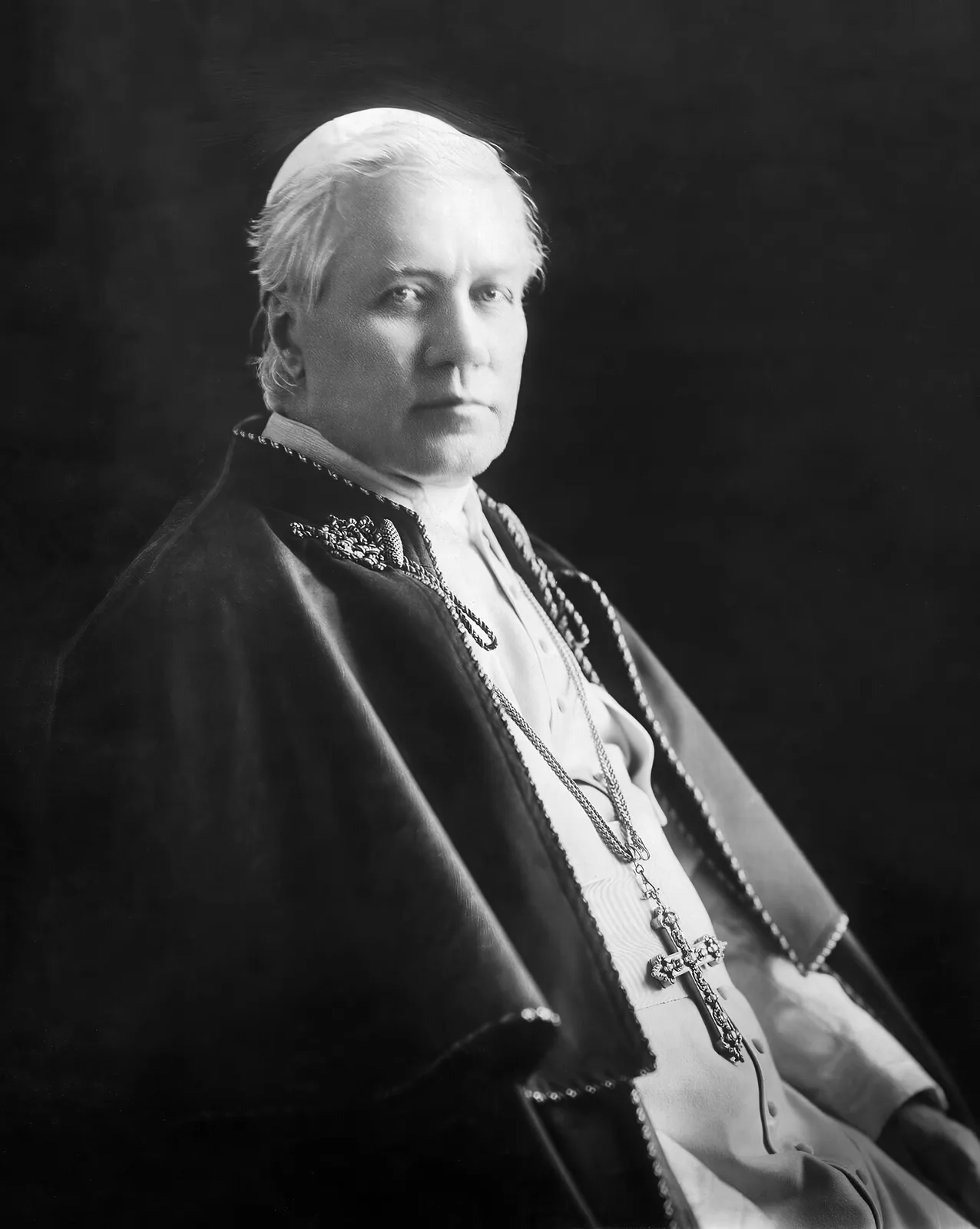
Giuseppe Sarto was born in 1835 at Riese in the Veneto, into a poor family — his father was the village postman. A country parish priest, then bishop of Mantua and patriarch of Venice, he was elected pope in 1903 and took as his motto “to restore all things in Christ”. His pontificate left its mark on liturgy and sacramental life: he encouraged frequent communion and lowered the age of first communion to the age of reason, seven, breaking with a custom that had deferred it to adolescence. He reformed liturgical chant, launched the recasting of canon law and reorganised the curia. He condemned modernism with a severity that weighed lastingly on Catholic theological research, and the repression that followed has left judgements on his pontificate divided. He died in August 1914, weeks after the outbreak of the First World War he had been unable to prevent. Canonised in 1954, he is commemorated on 21 August.
Recognising
Shown in tiara or white mozzetta, his face drawn, often with a host or a child receiving communion beside him.