Hildegard of Bingen
A German abbess, writer, composer, and mystic, her powerful visions and contributions to science and music were extraordinary for her time.
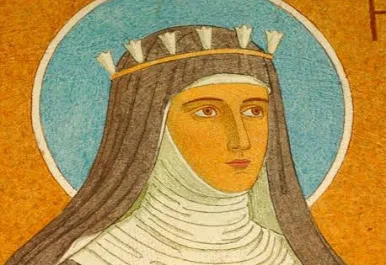
- Middle Ages
- Germany
- Feast day September 17
- 1098 – 1179
- Virgin
- Doctor of the Church
- Founder
- Mystic
Hildegard of Bingen is one of the most remarkable figures of the Middle Ages. Born in 1098 in the Rhineland, she was offered to the Benedictine monastery of Disibodenberg as a child. After the death of Jutta of Sponheim, her mentor and first abbess, Hildegard herself became abbess. Around 1150, she founded her own abbey at Rupertsberg, near Bingen, and later another at Eibingen. A mystic and visionary, she documented her revelations in major works such as 'Scivias' (Know the Ways of God). She was also a prolific composer, her musical works compiled in the 'Symphonia armoniae celestium revelationum'. Her erudition extended to medicine ('Physica' and 'Curae et Causae'), botany, and cosmology. Hildegard corresponded with many influential figures of her time, including popes and emperors, and did not hesitate to preach publicly, an exceptional feat for a woman of her era. She was proclaimed a Doctor of the Church by Pope Benedict XVI in 2012, thus recognizing the depth of her theology and the extent of her influence.
Places
- Birth
- Bermersheim vor der Höhe
- Death
- Bingen am Rhein
- Pilgrimage
- Abbaye Saint-Hildegard, Eibingen